How to Track Competitor Ad Creatives and Landing Pages

You spot a rival’s new ad dominating your feed, but when you check back later to see where the traffic went, the campaign has vanished. Manual screenshots leave you reacting to old news, while competitors quietly iterate on the assets actually stealing your market share.
What is the best workflow for tracking and reverse-engineering competitor ad creative and landing pages? The optimal approach combines automated asset archiving to capture active creatives with active funnel participation—purchasing their products to map backend sequences—cutting campaign time-to-profitability from months to weeks.
Auditing active ad creatives
When marketers ask how do you use the meta ad library and google ads transparency center for competitor research, the answer lies in tracking longevity and messaging patterns rather than simply downloading images.
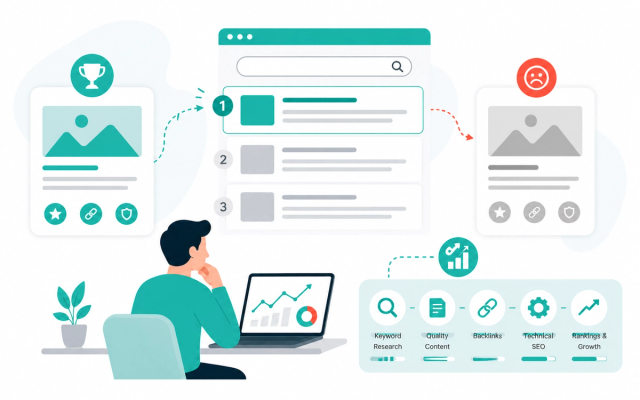
Start your workflow by searching for verified competitors in the Google Ads Transparency Center. This public database reveals active Search, Display, and YouTube ads, allowing you to filter by region and publication date. Your objective is to identify repetitive headlines and highlighted offers, as consistency across multiple variations usually indicates strong performance. For social channels, the Meta Ad Library exposes active campaigns across Facebook and Instagram. Here, you should track the longevity of specific creatives. If a competitor has funded the exact same funnel or ad for six consecutive months, it is a definitive signal of profitability.
Documenting these findings systematically prevents wasted budget. According to Get-Ryze.ai, adopting a structured tracking approach helps businesses avoid wasting 60% to 70% of their advertising spend on creative concepts that rivals have already tested and discarded. Citing WordStream's 2025 PPC benchmark report, businesses performing regular competitive analysis achieve a 23% higher click-through rate and an 18% lower cost-per-acquisition.
To standardise this process, deploy a creative pattern analysis. Log the format distribution of rival ads to see if their spend skews toward 15-second video testimonials or single-image graphics. Follow this with a messaging hierarchy framework that breaks competitor copy down into core psychological triggers, categorising primary hooks into pain-focused, benefit-focused, or curiosity-driven angles.
Reverse-engineering destination pages
An ad only tells half the story; its true value is determined by where it sends the click. Reverse-engineering competitor landing pages involves connecting traffic acquisition directly to conversion assets to understand how they guide users toward a purchase.
Click through active ads and systematically document the destination page's structure. Record the headline and subheadline phrasing, the above-the-fold value proposition, and trust signals such as customer counts or authority badges. According to Uncommon Logic, a critical aspect of this analysis is observing how competitors align their landing page content with their ad copy promises, as tight alignment is what actually drives conversions.
To understand the mechanics behind the page, use browser extensions like the BuiltWith Technology Profiler and Ghostery. The Shopify guide to funnel hacking notes that these tools reveal the underlying scripts and tracking mechanisms in place, such as the Meta pixel or specific email providers. You should also run competitor pages through Google PageSpeed Insights, as faster loading times correlate strongly with lower cost-per-click rates and superior auction performance.
Because landing pages change frequently, tracking requires historical archiving. Panoramata recommends adding competitors to an automated monitoring dashboard that captures both active ads and their corresponding landing pages. This creates a durable record of how their positioning angles and layouts iterate over time, providing a benchmark for your own design decisions.
Mapping the backend sales funnel
Tracking the public-facing elements of a campaign is only the beginning. To truly reverse-engineer a competitor's strategy, you must participate in their funnel as a buyer.
This process involves actively moving through the competitor's customer journey to capture assets hidden behind paywalls and form submissions. Start by subscribing to their email lists and downloading their lead magnets. This allows you to map out their backend sequences, noting the sending frequency, tone, and the specific triggers they use to transition cold leads into paying customers.
The Deadline Funnel guide insists that you must actually purchase the competitor’s products to uncover the post-purchase funnel. By paying for their offerings, you can experience and document their cross-sells, upsells, downsells, and subsequent automated marketing emails. Throughout this entire journey, take screenshots and record screen videos of checkout pages and retargeting ads, saving the precise URLs before they disappear. Compile these gathered assets into a centralized swipe file to identify broader trends in call-to-action phrasing and offer structures across your industry.
Automating competitive monitoring
Relying on manual spreadsheets to track all these variables eventually breaks down as your competitor list grows. To build a scalable intelligence program, you need to transition from quarterly reviews to continuous monitoring, which requires understanding How to Monitor Competitor Ad Strategy Across Channels.
A case study by Refoundai highlights the limits of manual tracking, noting that agencies often discover competitor campaigns weeks after they launch. To solve this, the agency implemented a multi-platform workflow using automated browser orchestration to navigate ad libraries and handle anti-bot measures automatically. Custom scrapers captured ad creative and landing page content, while intelligent change detection identified new campaigns and messaging shifts the moment they went live.
Implementing this automated system saved the agency 20 hours per week and delivered a 90% faster response time. Rather than relying on outdated manual checks, the workflow provided same-day intelligence, allowing clients to respond to market shifts in days instead of months.
Translating data into better ROI
When asking how do businesses translate competitor ad intelligence into tactical campaign adjustments that improve roi, the answer lies in identifying market gaps rather than copying rivals outright.
Categorise the messaging frameworks your competitors use—such as price, quality, convenience, or social proof. This classification highlights what they are ignoring. If every direct competitor relies heavily on price-led carousel ads, your opportunity lies in testing premium, benefit-driven video testimonials to capture the audience segments they have abandoned. You can learn the specific mechanics of this execution in our guide on How to Adjust Campaigns Based on Competitor Data.
Once you have identified these strategic gaps, your execution must keep pace with your research. This is where SproutMe bridges the gap between intelligence and action. SproutMe agents turn your new strategic priorities into a predictive plan, executing campaigns across Google and Meta while continuously adjusting bids, audiences, and creative rotations based on actual performance data, ensuring your response to competitor movements is immediate and grounded in revenue.
Conclusion
Tracking competitor ad creatives and landing pages is not about copying their marketing; it is about establishing a baseline for your own testing. By utilizing transparency libraries to log active creatives and actively participating in competitor funnels as a buyer, you map the complete customer journey from the first click to the final upsell. Transitioning this process from manual screenshots to an automated archiving workflow ensures you capture fleeting ad variations and landing page adjustments before they vanish. When you consistently document these shifts, you stop reacting to what competitors did last quarter and start capitalising on the audience segments and messaging angles they are currently ignoring.
Frequently Asked Questions
Longevity is the strongest indicator of performance. If a competitor continues to spend money running the exact same ad creative in the Meta Ad Library or Google Ads Transparency Center for six consecutive months, that asset is highly likely to be profitable.
The Google Ads Transparency Center allows you to search for verified competitors by name to view their active Search, Display, and YouTube campaigns. You can filter the results by region and date to track which headlines they test most frequently.
Browser extensions like the BuiltWith Technology Profiler and Ghostery reveal the underlying infrastructure of a competitor's landing page. These tools show which tracking pixels, email marketing providers, and personalization software they use to convert traffic.

Get a complimentary audit to uncover AI opportunities hidden in your data.
Put these strategies to work