How to Reduce Cost Per Lead Without Sacrificing Lead Quality

For many businesses, rising lead costs feel inevitable.
Competition increases, advertising platforms become more expensive, and suddenly the cost of acquiring a lead is significantly higher than it was a year ago. The common response is to chase cheaper clicks, broader audiences, or lower-cost traffic sources.
That approach rarely works.
Lowering cost per lead by itself is not a growth strategy. If lead quality drops, sales teams spend more time filtering prospects, conversion rates decline, and revenue suffers.
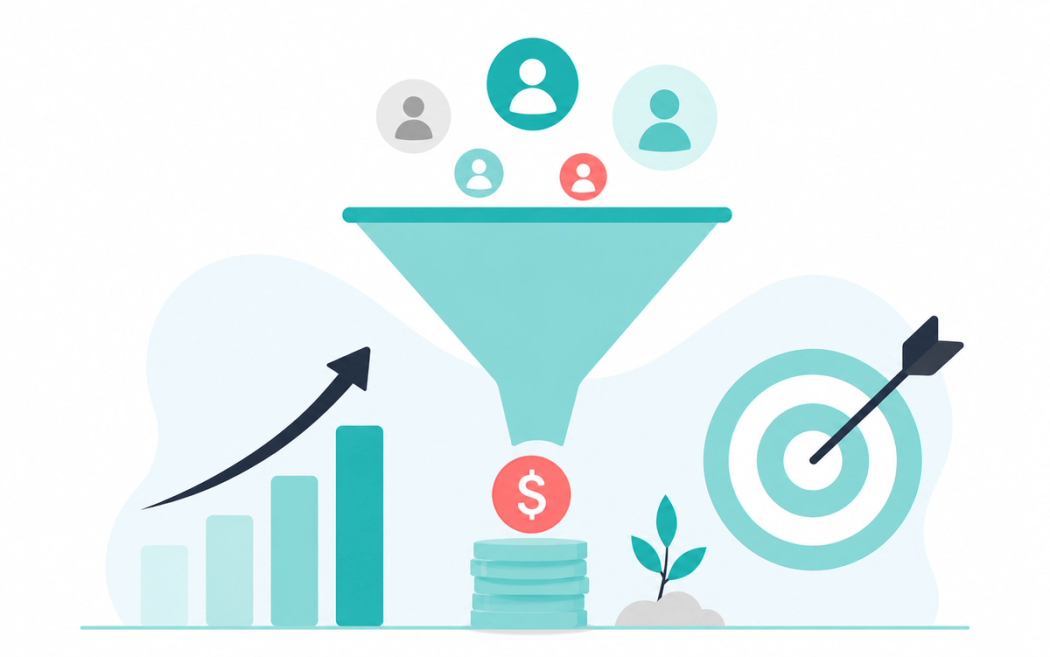
The businesses that consistently improve acquisition efficiency focus on something different. They optimize the entire customer acquisition system, not just the advertising campaign.
This is where a modern automated ai ads agency takes a fundamentally different approach. Instead of pursuing cheaper leads, the focus shifts toward creating a more efficient path from click to customer.
Most CPL Problems Are Conversion Problems
When lead costs rise, businesses often assume the advertising platform is underperforming.
In reality, the bottleneck frequently exists after the click.
A campaign generating 1,000 qualified visitors per month can produce dramatically different results depending on landing page experience, offer clarity, lead capture flow, and conversion friction.
Consider a simple example:
If 1,000 visitors convert at 3%, you generate 30 leads.
Improve conversion rates to 6% without increasing traffic, and you generate 60 leads from the same spend.
Your effective cost per lead is cut in half.
Before adjusting targeting or budgets, businesses should evaluate:
- Landing page relevance
- Mobile user experience
- Form abandonment rates
- Offer-market fit
- Page speed and usability
Many of the companies struggling with lead costs are actually dealing with conversion inefficiencies.
This is also why businesses often discover the real issue isn't advertising itself. As we discussed in "Spending on Ads but Not Seeing Sales? Here's What's Actually Broken," campaign performance is heavily influenced by what happens after a prospect clicks.
Better Data Beats Better Targeting
Many advertisers respond to rising CPL by narrowing audiences.
That strategy worked better five years ago than it does today.
Modern advertising platforms increasingly rely on machine learning systems that analyze behavioral patterns, purchase intent, and conversion signals at scale. Restrictive audience targeting can sometimes limit an algorithm's ability to find high-value prospects.
The more effective approach is improving signal quality.
An experienced ai marketing agency focuses on helping platforms understand which leads actually become customers.
That often involves:
- CRM integrations
- Offline conversion tracking
- Customer match audiences
- First-party data activation
- Revenue-based optimization
When platforms receive better feedback loops, they become more efficient at finding prospects who resemble your highest-value customers.
The objective is not reaching more people.
It's reaching more people who are likely to buy.
AI Is Changing Performance Metrics
Many businesses still optimize campaigns around lead volume.
Increasingly, that metric tells an incomplete story.
AI-powered advertising systems can now optimize toward deeper business outcomes such as:
- Qualified sales opportunities
- Booked appointments
- Pipeline value
- Closed revenue
- Customer lifetime value
This shift matters because lead quality varies dramatically.
One hundred leads generated through a low-intent campaign may produce less revenue than twenty highly qualified prospects.
The same principle is becoming visible across AI-driven search platforms.
When a user asks ChatGPT, Gemini, or Perplexity for recommendations, these systems don't rank brands solely based on advertising spend or website traffic. They evaluate authority signals, content quality, reviews, trust indicators, brand mentions, and demonstrated expertise before surfacing recommendations.
Advertising platforms are evolving in a similar direction. The stronger the quality signals you provide, the better the system becomes at finding high-intent buyers.
Stronger Messaging Creates Better Leads
Not every prospect should convert.
One of the fastest ways to improve lead quality is to become more specific about who your offer serves.
Many campaigns attempt to maximize lead volume by appealing to everyone. The result is often higher acquisition costs and lower conversion rates downstream.
High-performing campaigns do the opposite.
They clearly communicate:
- Who the solution is designed for
- Expected outcomes
- Business fit requirements
- Investment expectations
- Typical customer profiles
This naturally filters out poor-fit prospects before they enter the sales process.
While lead volume may decrease slightly, sales efficiency often improves significantly because teams spend less time qualifying unfit opportunities.
First-Party Data Drives Growth
As privacy regulations evolve and third-party tracking becomes less reliable, first-party data is becoming one of the most valuable assets in marketing.
Businesses that connect customer data, CRM insights, purchase history, and revenue outcomes to advertising systems create stronger optimization loops.
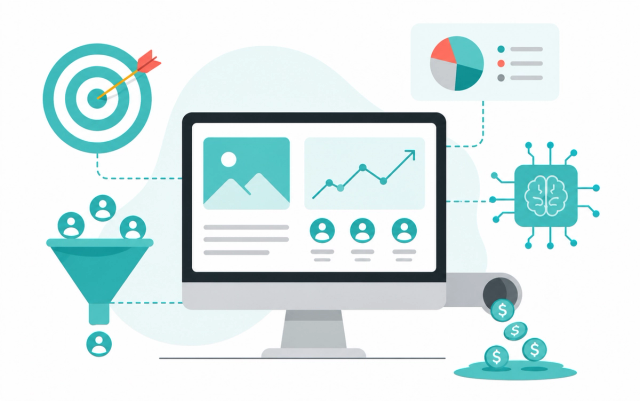
Those feedback loops enable predictive marketing models to identify patterns that manual campaign management often misses.
This is one reason AI-powered growth systems consistently outperform campaigns built around surface-level metrics such as clicks, impressions, or lead volume alone.
The future of customer acquisition belongs to businesses that can connect marketing activity directly to revenue outcomes.
Conclusion
Reducing cost per lead without sacrificing quality requires a shift in perspective.
The goal is not to generate cheaper leads. The goal is to build a more efficient acquisition system.
Businesses that improve conversion rates, strengthen data quality, leverage AI-driven optimization, and align marketing with revenue outcomes consistently outperform those focused solely on lowering CPL.
As AI reshapes both advertising and search behavior, growth will increasingly come from systems that can identify, attract, and convert high-intent buyers with greater precision.
Improve Lead Quality, Not Just CPL
Most businesses don't have a lead generation problem. They have an optimization problem.
SproutMe helps businesses build AI-powered marketing systems that improve lead quality, reduce acquisition costs, and connect marketing performance directly to revenue growth. If your customer acquisition costs are rising, it may be time to optimize the entire funnel, not just the ads.
Frequently Asked Questions
Improve conversion rates, strengthen first-party data, optimize lead qualification, and provide better conversion signals to advertising platforms. Lower CPL typically comes from improved efficiency, not cheaper traffic.
Advertising competition continues to increase across most industries. Rising costs are normal. Businesses that improve conversion efficiency and revenue attribution often offset these increases successfully.
Yes. AI-powered advertising systems can identify patterns across customer behavior, conversion history, and revenue outcomes to find prospects more likely to become customers.
Lead quality. A smaller number of qualified leads generally produces better sales outcomes and higher return on marketing investment than a large volume of unqualified prospects.
First-party data helps advertising platforms understand which prospects generate revenue. Better signals improve optimization accuracy, resulting in more efficient customer acquisition over time.

Get a complimentary audit to uncover AI opportunities hidden in your data.
Put these strategies to work