How AI Expands Marketing Agency Profit Margins


You are signing new retainers, but your profit margin is stuck because every account requires more headcount. Labour consumes half your revenue, and scope creep on reporting drags utilisation down. Hiring specialists to handle manual work just resets the trap at a higher tier.
Agencies implementing AI-driven campaign automation typically see gross margins expand by 5 to 10 percentage points. That improvement comes from recovering non-billable hours previously lost to routine reporting, bid pacing, and campaign setup, allowing the same core team to manage more accounts without burning out.
The math behind agency margins
The business model of a digital marketing agency is essentially arbitrage on specialised labour. Labour costs are consistently the largest expense on the profit and loss statement, typically consuming between 50% and 70% of total revenue. Because wages are fixed but daily output is variable, your profitability is highly sensitive to delivery efficiency and how much of your team's time is actually billed to clients.
Most performance marketing agencies aim for a billable utilisation rate between 70% and 80%. In practice, unmanaged scope creep and manual administrative work frequently drag that figure down closer to 60%. Every hour a senior media buyer spends formatting performance metrics in a spreadsheet is an hour they cannot spend optimising a live account or onboarding a new one.
The math on a standard monthly retainer is unforgiving. If a client pays a fixed fee and your delivery relies on 25 hours of manual work from a strategist whose fully loaded cost is high, the gross margin is tightly capped. When non-billable hours inflate the cost of delivery, the gross margin on that retainer compresses rapidly. You cannot just raise prices to compensate for operational inefficiency, which means the only viable path to higher net profit is reducing the hours required to deliver the same outcome.
Where manual execution leaks profit
The most significant margin leaks in a performance agency are rarely strategic failures; they are operational bottlenecks that eat up time. The friction begins the moment a contract is signed. Onboarding a new client requires collecting brand assets, establishing CRM connections, configuring tracking pixels, and aligning on tone of voice. When handled manually, this back-and-forth communication can delay campaign launches by weeks, deferring revenue and frustrating the client before any actual marketing begins.
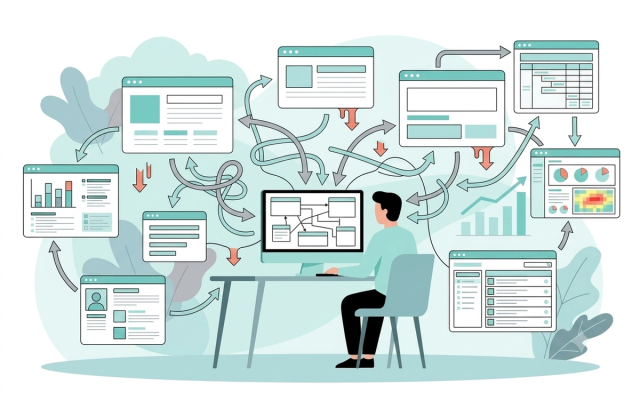
Once a campaign is live, the recurring drain is reporting and daily maintenance. Extracting data from Google Ads, Meta, LinkedIn, and a third-party analytics platform to compile a cross-channel monthly report takes hours per client. Across a portfolio of 20 accounts, an agency loses hundreds of hours every month simply telling clients what happened last week. This reporting cycle does not improve performance; it just taxes the margin.
Beyond reporting, basic bid pacing and budget reallocation require someone to physically log into multiple ad managers, check the spend against the target, and adjust the daily limits. These are high-volume, low-complexity tasks. They are necessary for the account to function, but having an expensive human practitioner click the buttons is a misallocation of resources that destroys profitability.
Moving from workflows to agents
Many agencies attempt to solve this margin compression with basic workflow automation. Connecting a web form to a project management tool speeds up onboarding, and pulling raw metrics into a dashboard saves the strategist from downloading CSV files. While helpful, workflows only present information. Humans still have to interpret the dashboard, decide what to do, and log back into the ad platforms to make the adjustments.
The structural shift happens when you replace static workflows with agentic execution. Instead of a rule-based alert telling a media buyer that a campaign is pacing behind its target, an AI agent adjusts the bids to correct it automatically. We built SproutMe Execute so agents can launch and continuously adjust live campaigns within firm spend and scope guardrails. When the system handles the ongoing bid, budget, and creative optimisation based on real performance data, the agency team focuses entirely on strategy and client communication.
This operational leverage is the key to multiplying agency account capacity with AI agents. It breaks the direct link between revenue growth and headcount growth. If the machine does the clicking, the human can direct the strategy for twice as many clients without a drop in quality.
Raising utilisation without burnout
Expanding profit margins through AI is not about cutting staff. It is about reallocating the hours your team already works toward high-leverage, billable activities. If automation recovers 10 to 15 hours of manual labour per month on a standard retainer, the agency's delivery cost drops while the retainer fee remains unchanged. That resulting gap is pure margin.
More importantly, it changes the ceiling on output. An account manager who spends half their week on data entry taps out at a handful of accounts. When that friction is removed, they can comfortably manage a larger portfolio without working unmanageable hours. Relieving the team of data extraction means they have the mental bandwidth to actually analyse the competitive landscape and test new angles.
Understanding how AI changes the agency operating model means recognising that technology should absorb the operational load. A team that operates at an 80% utilisation rate because the AI handles the repetitive plumbing will consistently out-earn a team bogged down in spreadsheets, all while experiencing significantly lower employee turnover.
Retention compounds the margin gains
Acquiring a new agency client is expensive, and replacing a churning one eats directly into net profit. A hidden but massive benefit of automating the operational plumbing is output consistency. Agencies frequently lose clients after 12 months not because the return on ad spend was terrible, but because communication was inconsistent and reporting was always late.
When reporting is delivered precisely on time, insights are clear, and optimisations happen continuously rather than waiting for a weekly review, client satisfaction stabilises. Consistent communication extends the average client lifespan. Retaining a client for 14 months instead of six effectively doubles their lifetime value without incurring a second acquisition cost.
When revenue scales on top of a flat cost structure, and client churn drops because the operational output is finally consistent, the financial profile of the agency transforms. The resulting margin expansion gives the founders the capital to reinvest in senior talent, test new acquisition channels, or confidently drop lower-tier accounts that demand too much time.
Conclusion
To protect and expand your profit margins, you have to disconnect your revenue capacity from your manual headcount. Shifting the repetitive burden of cross-channel reporting, campaign setup, and daily bid management to AI agents allows your existing team to handle more accounts and operate at a much higher utilisation rate. The agencies that thrive over the next decade will be the ones where humans set the direction and machines carry the operational load. See how SproutMe Execute launches and adjusts live campaigns within your approved guardrails so your team can focus on growth.
Frequently Asked Questions
Routine performance reporting and data extraction offer the fastest return on investment. Connecting analytics and ad platforms to an automated workspace removes the non-billable hours spent formatting spreadsheets, allowing strategists to focus entirely on analysing the outcomes and adjusting the plan.
AI reduces the total hours required to deliver a retainer, which lowers the agency's cost of delivery. By eliminating manual data entry and basic campaign setup, agencies shift their team's time toward high-value, billable strategic work, directly improving gross margins.
No. AI agents excel at continuous monitoring, bid pacing, and data aggregation, but they lack the business context to define an overarching strategy. The most profitable agencies use AI to handle the operational load so human strategists can manage more accounts.

Get a complimentary audit to uncover AI opportunities hidden in your data.
Put these strategies to work