AI Without Oversight: Why Healthcare Content Can't Be Left to Machines

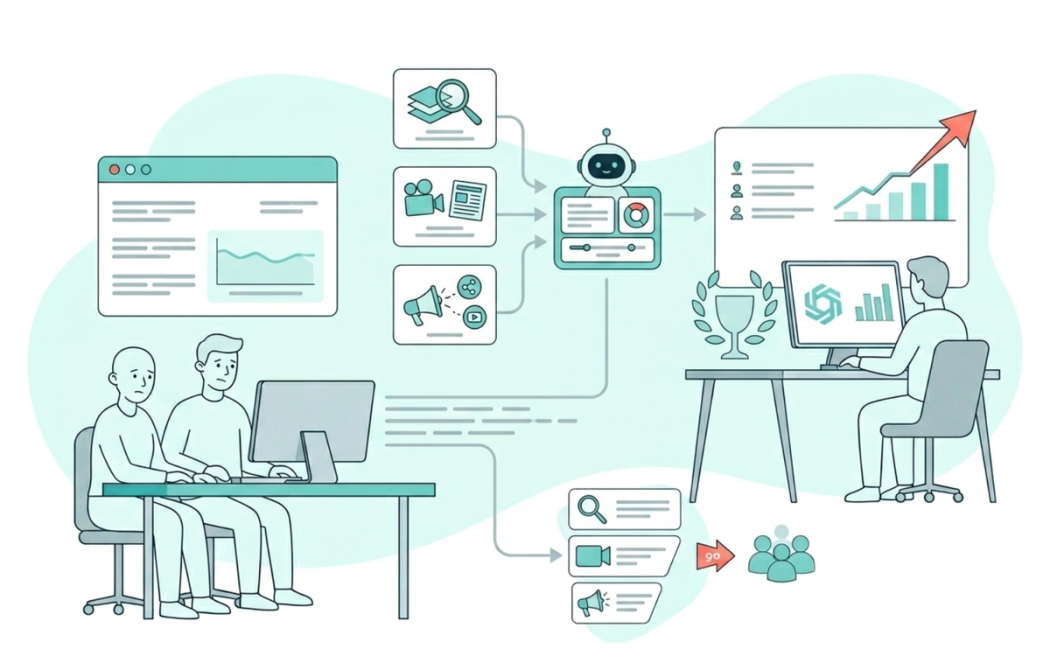
AI has fundamentally changed how healthcare organizations produce content. Educational articles, patient resources, email campaigns, and website copy can now be drafted in minutes instead of days.
Efficiency is valuable. Accuracy is essential.
Healthcare content influences patient decisions, organizational credibility, and search visibility. Publishing AI-generated content without expert review introduces risks that extend well beyond poor writing. It can create factual inaccuracies, omit critical context, weaken trust, and make compliance more difficult.
The organizations gaining the greatest value from AI are not removing people from the process. They are using AI to accelerate production while keeping clinical and editorial expertise firmly in control.
AI Can't Replace Clinical Judgment
Generative AI excels at summarizing information, identifying patterns, and producing readable content. It cannot evaluate clinical nuance with the consistency required for healthcare communication.
Medical recommendations often depend on patient history, evolving clinical evidence, treatment guidelines, and regulatory considerations. A statement that appears technically correct may still be incomplete or inappropriate without additional context.
Healthcare organizations also need content that reflects their own standards of care, tone, and risk policies. Those decisions require professional judgment, not statistical prediction.
The most effective role for AI is supporting experts, not replacing them.
Trust Is Built Through Accuracy
Healthcare is one of the highest-trust industries, and content plays an important role in maintaining that trust.
Patients increasingly research symptoms, treatments, providers, and procedures before making decisions. They expect information that is balanced, evidence-informed, and easy to understand.
Search engines apply the same expectation. Google classifies healthcare as Your Money or Your Life (YMYL) content because inaccurate information can influence health decisions. Content in this category is evaluated against a higher standard for expertise, authority, and trustworthiness.
Organizations that publish carefully reviewed content strengthen both patient confidence and long-term search performance.
AI Search Rewards Credibility
AI-powered search is changing how healthcare information is discovered.
Instead of presenting a list of links, AI search engines increasingly generate direct answers by evaluating multiple trusted sources. They favor content that demonstrates expertise, answers questions clearly, and aligns with established medical knowledge.
This changes how healthcare organizations should approach content strategy.
Publishing more AI-generated articles is unlikely to improve visibility if those articles lack expert validation or original insight. High-performing content combines medical expertise, clear structure, technical optimization, and patient-focused communication.
Credibility has become a competitive advantage for both traditional SEO and AI-driven search.
AI Works Best in Expert Workflows
The strongest healthcare marketing teams are redesigning workflows, not replacing people.
AI can speed up research, organize information, suggest content structures, and create first drafts. Human experts contribute what technology cannot: clinical judgment, ethical oversight, regulatory awareness, and editorial precision.
An effective workflow typically includes:
- AI-assisted content drafting
- Clinical or subject matter review
- Editorial quality assurance
- Compliance verification
- Search optimization before publication
This approach improves efficiency without compromising quality, helping organizations produce content that is accurate, discoverable, and worthy of patient trust.
Solutions such as SproutMe support this model by combining AI-powered marketing execution with structured workflows, predictive optimization, and full-funnel visibility, allowing organizations to scale content production while maintaining quality standards.
Conclusion
AI is becoming an essential part of healthcare marketing, but it should never become the final reviewer.
Organizations that combine AI efficiency with clinical expertise create stronger content, build greater trust, and position themselves more effectively for both traditional search and AI-powered discovery.
The future belongs to healthcare teams that use AI to enhance expert decision-making, not replace it.
In healthcare, technology accelerates content creation. Human oversight protects its integrity.
Don't Let Speed Undermine Patient Trust
Publishing healthcare content without expert oversight can weaken credibility, reduce search visibility, and create unnecessary risk. As AI-powered search increasingly prioritizes trustworthy sources, accuracy becomes a competitive advantage.
SproutMe helps healthcare organizations combine AI-powered marketing execution with expert-guided workflows, predictive optimization, and full-funnel visibility to create content that earns trust, supports compliance, and performs across both traditional search and emerging AI-driven search experiences.
Frequently Asked Questions
Yes. AI can efficiently produce drafts and summarize information, but healthcare content should always undergo expert review before publication.
Healthcare content requires clinical accuracy, regulatory awareness, and contextual judgment that AI cannot consistently provide on its own.
Yes. Google evaluates content based on quality, expertise, usefulness, and trustworthiness rather than whether AI assisted in creating it.
Use AI for research support, drafting, and workflow efficiency while relying on qualified experts for fact-checking, compliance review, and final approval.
Organizations improve visibility by publishing authoritative, evidence-informed content with clear structure, expert oversight, and a consistent focus on answering patient questions accurately.

Get a complimentary audit to uncover AI opportunities hidden in your data.
Put these strategies to work